Home Blog Page 94

Bishop John of Bergamo’s Legendary Taming Of A Wild Horse

Saint John of Bergamo was consecrated as leader of the Bergamascan or Bergamasque bishopric in 656, and he would continue serving as the Bishop of Bergamo for more than three decades. Bishop John’s reign as the religious leader in the Lombard dukedom of Bergamo coincided with the heydays of several colorful Lombard kings, including King Aripert I (r. 653-661), King Grimoald (r. 662-671), King Perctarit (r. 671-688), and King Cunincpert (r. 688-700). Although the aging bishop of Bergamo did not last long into King Cunincpert’s reign (he may have only lived two years into the king’s sovereignty), the two were said to have crossed paths and caused enough drama in their limited time together for folktales and legends to be born.

Saintly Bishop John of Bergamo, so the story goes, was an opinionated and outspoken man, especially when it came to matters of faith and character. Perhaps, this pointedly talkative characteristic became more pronounced when Bishop John was feeling merry and emboldened at a banquet. Such a possibility was primed to occur when Bishop John and King Cunincpert happened to attend the same feast sometime between 688 and 690.

As was the case of many medieval monarchs, King Cunincpert was a man of noticeable flaws and shortcomings. Bishop John of Bergamo, being naturally inclined to critique impious and immoral behavior, might have used the banquet as an opportune teaching moment, perhaps taking the time to launch verbal jabs at King Cunincpert’s unacceptable past behavior, and suggesting better methods of action in the future. Whatever the case, old Bishop John of Bergamo said something that infuriated the thin-skinned king, and Cunincpert began plotting for revenge. With an aim of pranking, injuring or worse, King Cunincpert allegedly arranged for the bishop to be secretly given an unmanageable horse as a mount. A Lombard historian named Paul the Deacon (c. 720-799) narrated this odd tale:

“Since he [Bishop John] had offended king Cunincpert while they were conversing at a banquet, the king commanded to be prepared for him when he was returning to his inn a fierce and untamed horse who was accustomed to dash to the earth with a great snorting those who sat upon him. But when the bishop mounted him he was so gentle that he carried him at an easy gait to his own house. The king, hearing this, cherished the bishop from that day with due honor and bestowed upon him in gift that very horse…” (Paul the Deacon, History of the Lombards, 6.8).

Maybe it was a miracle; or perhaps, Bishop John was simply a talented horseman. Whatever the case, the tale left an impression on the medieval Italians and no doubt contributed to Bishop John of Bergamo’s reputation as a saint. Although no precise date of death is certain, Bishop John is thought to have died around the year 690, whereas his newfound admirer, King Cunincpert, continued to reign over the Lombards until the year 700.

Written by C. Keith Hansley

Picture Attribution: (Theodore on a donkey surrounded by bishops and monks, by Reinier Vinkeles I (c. 19th century), [Public Domain] via Creative Commons and the Rijksmuseum.jpg).


Sources:

Syrinx, by Carroll Beckwith (c. 1852-1917)

This colorful and slightly abstract painting, by the American artist Carroll Beckwith (c. 1852-1917), was inspired by a sculpture from Simon Mazière (c. 1649-1722). The statue and painting both reference a sad myth from ancient Greece about an unfortunate naiad nymph named Syrinx. As was all too common for the frequently victimized nymphs in Greek mythology, Syrinx was pursued by male deities who refused to take “No” for an answer. In Syrinx’s case, her relentless and overly-persistent pursuer was the insatiable satyr-god, Pan. In their final encounter, wild Pan decided he was done with talk and courtship, instead opting to chase down Syrinx by force. Fortunately, this particular nymph was an admirer of the hunter-goddess Artemis, and she had trained herself to mimic some of her idol’s athleticism. Pan was not disheartened by the chase. He pursued her, slowly gaining ground and eventually cornering her at a riverbank. It was at that time, when the lusty satyr was closing in, that Syrinx called on her power as a naiad (and on the assistance of other nearby water nymphs) in order to undergo a transformation that would spare her from the clutches of Pan. The Roman poet, Ovid (43 BCE-17 CE), described Syrinx’s appearance, her escape, and her final transformation:

“In the cold Arcadian mountains,
among the Nonácrian wood-nymphs, there lived a remarkable naiad
(Syrinx her sisters called her), whom all admired for her beauty.
More than once she’d eluded pursuit by lascivious satyrs
and all the various gods who dwell in the shadowy forests
and fertile fields. She modelled herself on the goddess Diana [Artemis]
in daily life and by staying chaste.

the nymph rejected the god’s advances
and fled through the fields, until she arrived at the river Ladon
peacefully flowing between its sandy banks. Since the waters
were barring her way, she called on the nymphs of the stream to transform her.
So just at the moment when Pan believed that his Syrinx was caught,
instead of a fair nymph’s body, he found himself clutching some marsh reeds.”
(Ovid, Metamorphosis, 1.689-706).

Syrinx’s metamorphosis is captured in Carroll Beckwith’s painting, depicting the naiad nymph in the middle of her transformation into a patch of reeds. Unfortunately for Syrinx, her magic spell did not stop Pan from abusing her. As the story goes, it is none other than Syrinx’s own newly-grown reeds that Pan harvested to make his famous reed pipe. Therefore, Pan kept with him a portion of the nymph that got away, fondling it often with his fingers and his lips.

Written by C. Keith Hansley


Sources:

Giovanni Boccaccio

Giovanni Boccaccio (c. 1313-1375)

“The Muses are ladies, and although ladies do not rank as highly as Muses, nevertheless they resemble them at first sight, and hence it is natural, if only for this reason, that I should be fond of them. Moreover, ladies have caused me to compose a thousand lines of poetry in the course of my life, whereas the Muses have never caused me to write any at all.”

  • The Decameron (Fourth Day, Introduction) by Giovanni Boccaccio, translated by G. H. McWilliam. New York: Penguin Classics, 2003.

The Viking-British Sibling Settlers Of Iceland

Two brothers, Hildir and Hallgeir, along with their sister, Ljot, journeyed to Iceland during the so-called Age of Settlement (c. 860-930). This trio reportedly came from the British Isles, but no specific details were given about their place of birth. On their origins, the medieval Icelandic Book of Settlements (Landnámabók), simply said that they “were of British stock” (LandnámabókSturlubók manuscript, chapter 349). Perhaps places such as Ireland, the Hebrides, Orkney, Shetland, and the Faroes could be taken off the list, for the authors of Iceland’s early texts and sagas seemed quite knowledgeable about who came to Iceland from these particular places, often specifically mentioning the islands by name in their accounts of early immigrants to Iceland. Maybe the vagueness of Hildir, Hallgeir and Ljot’s place of origin means they were born on the British mainland, such as in the Danelaw of England—a relatively uncited place in the stories of Icelandic settlers. Whatever the case, as the Book of Settlements claimed, the siblings had British blood from one place or another.

Given that Hildir, Hallgeir and Ljot were dated to the Age of Settlement period (860-930), their early life in Britain must have been quite turbulent. The so-called Great Heathen Army of Vikings had arrived in England around 865 and began wreaking havoc on the kingdoms there, rampaging through Kent in 865, then marauding around East Anglia by 866, conquering Northumbria in 867, and invading Mercia in 868. Viking Armies repeatedly clashed with King Alfred the Great of Wessex (r. 871-899). King Alfred made peace with (or bought off) Vikings in his inaugural year as king in 871, and made peace agreements two more times with Vikings between 875-877. Guthrum’s famous invasion of Wessex began in 878, temporarily driving King Alfred into hiding, but the king of Wessex recovered and defeated the invasion with a counterattack within the year. Alfred the Great later had to defend against a new wave of Viking raids that began around 892, but by then he had reformed Wessex’ military and therefore the Vikings found England to be a much harder target to pillage. The English counter-attack against the Vikings and the Danelaw was continued by Alfred’s children, King Edward the Elder of Wessex (r. 899-924) and Queen Æthelflaed of Mercia (sole rule c. 911-918), and the family dream of bringing all of England under the dynasty’s control was cinched by Alfred’s grandson, King Athelstan (r. 925-939). An environment such as this, or similar waves of warfare that were simultaneously occurring in Ireland and Scotland, were what Hildir, Hallgeir and Ljot would have been sailing away from when they decided to move to Iceland in the late 9th century or early 10th century.

After departing from the British Isles, Hildir, Hallgeir and Ljot sailed to southern Iceland, settling close together along the mainland coast at a site opposite the Vestmannaeyjar archipelago. Each of the siblings, as was common of early Icelandic settlers, named their estates after themselves. Hildir’s home became known as Hildir’s Isle, while Hallgeir settled at the similarly-named Hallgeir’s Isle. Ljot, however, changed things up slightly by naming her home Ljotarstead.

Written by C. Keith Hansley

Picture Attribution: (Cropped section from illustration till Herrauds och Bosa Saga, by Pehr Hörberg (c. 1746-1816), [Public Domain] via Creative Commons and the National Museum of Stockholm Sweden).


Sources:

Noah: The Eve of the Deluge, by John Linnell (c. 1792-1882)

This painting, by the British artist John Linnell (c.  1792-1882), was inspired by the famous Biblical tales of the Great Flood (or Deluge) and Noah’s Ark. Found in the Book of Genesis, the story involves a divinely-unleashed worldwide flood that only began to abate after forty days. According to the tale, the only safe place to be during the torrential inundation was Noah’s Ark. Therefore, only Noah’s family and the lucky animals they brought onboard their ark were able to survive this primordial apocalypse. On this tale, the Book of Genesis, stated:

“For forty days the flood kept coming on the earth, and as the waters increased they lifted the ark high above the earth. The waters rose and increased greatly on the earth, and the ark floated on the surface of the water. They rose greatly on the earth, and all the high mountains under the entire heavens were covered. The waters rose and covered the mountains to a depth of more than fifteen cubits. Every living thing that moved on land perished—birds, livestock, wild animals, all the creatures that swarm over the earth, and all mankind. Everything on dry land that had the breath of life in its nostrils died. Every living thing on the face of the earth was wiped out; people and animals and the creatures that move along the ground and the birds were wiped from the earth. Only Noah was left, and those with him in the ark” (Genesis 7: 17-23, NIV translation).

John Linnell (c.  1792-1882) did not just rely on the ancient religious text for inspiration. Linnell used the English countryside as a muse, and he also is thought to have perused the lines of Paradise Lost, by John Milton (c. 1608-1674), in search of ways to envision the flood. Milton wrote:

“The one just man alive; by his command
Shall build a wondrous ark, as thou beheld’st,
To save himself and household from amidst
A world devote to universal wrack.
No sooner he with them of man and beast
Select for life shall in the ark be lodged,
And sheltered round, but all the cataracts
Of heav’n set open on the earth shall pour
Rain day and night, all fountains of the deep
Broke up, shall have the ocean to usurp
Beyond all bounds, till inundation rise
Above the highest hills: then shall this mount
Of Paradise by might of waves be moved
Out of his place…

And the clear sun on his wide wat’ry glass
Gazed hot, and of the fresh wave largely drew…
(John Milton, Paradise Lost, Book 11, lines 818-845)

Following John Milton’s narrative, the painting shows the storms of the Great Deluge beginning to gather as animals weave their way up to the safety of Noah’s Ark, which can be seen in the background of the painting on the right side. Linnell seems to convert Milton’s description of the hot sun into warm paint for the artwork’s colorful sunset. There is also something of Milton’s reflective and glassy description of water in John Linnell’s depiction of the rising seas on the horizon of the painting. In the foreground of the scene, Noah and his family look out over the landscape, the clouds, and the rising seas, taking in the paradoxical ominous and beautiful sights before having to flee, themselves, to the safety of the ship.

Written by C. Keith Hansley


Sources:

The Legend Of Duke Wechtari’s Bold Bald Charge

Wechtari was a nobleman from Vicenza who was a trusted figure in the entourage of King Grimoald of the Lombards (r. 662-671). Little is known about Wechtari’s early life and career other than that he was an acclaimed warrior and that the Lombard king deemed him to be a reliable and loyal subject. Such a glowing assessment of trustworthiness and allegiance, however, could not be extended to another one of King Grimoald’s vassals—Duke Lupus of Friuli.

Around 663, Duke Lupus was tasked with overseeing the northern holdings of the Lombard kingdom while King Grimoald marched south to defend his lands against an increase in aggression from Emperor Constans II of Constantinople (r. 641-668). Lupus, however, instead of meeting the challenge with integrity and competence, was said to have contrastingly administered the realm with corruption and misrule. Duke Lupus’ stewardship of northern Italy was so bad that, when King Grimoald eventually returned, Lupus fled back to Friuli and was so fearful of punishment that he decided to rebel. The fate of Duke Lupus’ rebellion was peculiar, to say the least. A horde of Avar warriors invaded Friuli (due to opportunism or diplomacy) and crushed Duke Lupus’ fledgling rebel army. King Grimoald, who politely waited for Lupus and the rebels to be slaughtered, eventually marched his forces toward Friuli, regained control of the region, and forced the Avars to withdraw. Not long after Friuli was regained by the Lombard forces, a son of Lupus named Arnefrit suddenly appeared with an army of Slavic mercenaries, hoping to stir his father’s dukedom back into rebellion. Nevertheless, the people of Friuli had experienced their fill of Avar raids and noble rebellions for the time being. The weary locals, therefore, turned quite hostile to Arnefrit, and he ended up being killed by an army of Friulans.

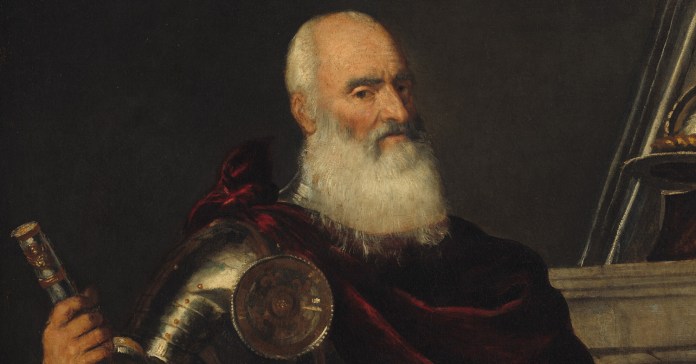
Duke Lupus’ treachery and death left King Grimoald with a vacant dukedom that he needed to fill, and the aforementioned loyal, trustworthy, and battle-hardened Wechtari was the perfect man for the job. Perhaps, he even was appointed in time to lead the Friulan army that defeated and killed Lupus’ Slavic mercenary-backed son, Arnefrit. Whatever the case, either before, during, or after Arnefrit’s failed campaign, Duke Wechtari became a feared man among the dukedom of Friuli’s enemies, and he was said to have had an especially terrifying reputation among Slavic warbands. The growth of his reputation, perhaps, was aided by Duke Wechtari’s possession of a noticeable physical feature—he had a bald head.

According to a no-doubt exaggerated legend, Duke Wechtari’s had such a fearsome reputation that his famous bald head could cause armies to flee from it as soon as they saw the gleam of his scalp on a distant horizon. One such peculiar tale was recorded by the Lombard historian, Paul the Deacon (c. 720-799), who claimed that Wechtari and a handful of troops once frightened off thousands of Slavic warriors by the duke simply appearing, in all his bald glory, within the enemy’s line of sight. Paul wrote:

“When he had come near the bridge of the river Natisio, which was where the Slavs were staying, he took his helmet from his head and showed his face to them. He was bald-headed, and when the Slavs recognized him [and saw] that he was Wechtari, they were immediately alarmed and cried out that Wechtari was there, and terrified by God they thought more of flight than of battle. Then Wechtari, rushing upon them with the few men he had, overthrew them with such great slaughter that out of five thousand men a few only remained, who escaped with difficulty” (Paul the Deacon, History of the Lombards, 5.23).

With tall tales such as this being remembered about him in the Friuli region (where Paul the Deacon was born), Duke Wechtari must have left a good impression on his people. Nevertheless, despite the positive light he was remembered in, little else (be it sober history or outlandish yarns) was recorded about Duke Wechtari. Besides the tale about his recognizable bald head and his prowess in battle, the only other descriptive quote that Paul the Deacon wrote about the beloved duke was that “He was born at the city of Vicentia (Vicenza), was a kind man, and one who ruled his people mildly” (History of the Lombards, 5.23). Duke Wechtari died a while before the year 688, and was succeeded by a man named Landari.

Written by C. Keith Hansley

Picture Attribution: (cropped section of a painting of Vincenzo Cappello, made by the artist Titian (c. 1488/1490 – 1576), [Public Domain] via Creative Commons and the National Gallery of Art).


Sources:

  • History of the Lombards by Paul the Deacon, translated by William Dudley Foulke (c. 1904). University of Pennsylvania Press, 1907, 1974, 2003.

The Return of Ulysses, Painted By Christoffer Wilhelm Eckersberg (c. 1783 – 1853)

In this curious painting, the Danish artist Christoffer Wilhelm Eckersberg (c. 1783 – 1853) re-creates a tale from the epic poem, The Odyssey, written by the ancient Greek poet, Homer (c. 8th century BCE). Homer’s Odyssey follows the adventures of the poem’s namesake, Odysseus (or Ulysses), as he struggles on his much-troubled journey home to Ithaca in the years following the Trojan War. After surviving encounters with sea monsters, witnessing the deaths of his entire crew of shipmates to various disasters, and being constantly caught up in an ongoing conflict between two camps of deities that contrastingly want him dead or alive, Odysseus finally was able to reach home. Nevertheless, he was not able to immediately celebrate his return.

Odysseus had spent ten years battling the Trojans, and it took another ten years for him to weave his way through the peoples, monsters and gods that blocked his path home. Therefore, when Odysseus finally did reach Ithaca, his wife, Penelope, and their son, Telemachus, had not seen the long-lost hero for twenty years. During his multi-decade absence, the Greeks had begun to fear that Odysseus was dead, and, as a result, opportunistic suitors began to accumulate around Penelope in Ithaca, vying for her hand in marriage (and also for the wealth and power that would come from the union). When Odysseus, upon his return, became aware of the situation, he decided to take things slowly. First, Odysseus met with a loyal swineherd named Eumaeus; then, Odysseus has a reunion with his son, Telemachus; and, finally, Odysseus disguised himself as a beggar and began slowly working his way towards Penelope’s position, making sure to gather information about the individual suitors that he found along the way. At last, the disguised Odysseus came face to face with Penelope, but with his costume, twenty years of aging, and some concealing magic from the goddess Athena, Penelope did not recognize him. Nevertheless, Penelope was hospitable towards the supposed beggar, and she even called over an old servant named Eurycleia to give his feet a much-needed cleaning.

When Eurycleia began working on Odysseus’ feet, she noticed something familiar about the stranger’s leg. Odysseus, it was said, had a nasty wound above one of his knees, which he had obtained while hunting a vicious boar. He was quite proud of the scar and he frequently told and retold the story to family and guests—therefore, servants had heard the tale and seen the scar many times. As a result, Eurycleia immediately recognized that the beggar was Odysseus as soon as she saw the unique scar. Homer described the scene:

“Eurycleia then came up to her master and began to wash him. At once she recognized the scar, the one Odysseus had received years before from the white tusk of a boar…It was this scar that the old woman felt and recognized as her hand passed over it. Abruptly she let go of her master’s foot, which made the metal ring as it dropped against the basin, upsetting it and spilling all the water on the floor…In the meantime Odysseus’ right hand sought and gripped the old woman’s throat, while with the other he pulled her closer to him” (Homer, The Odyssey, Book 19, approximately lines 390 and 465-480).

Although Odysseus was aggressive in his actions, Eurycleia was fine. Odysseus only wanted to stop Eurycleia from alerting Penelope and other nearby people of his true identity. It is this scene that is playing out in Christoffer Wilhelm Eckersberg’s painting, showing Odysseus using his foot to stop the metal bowl from ringing, and using his hand to keep Eurycleia from exclaiming her shock. Eurycleia, for her part, did agree to keep Odysseus’s identity a secret. Nevertheless, the secrecy would not need to go on for too much longer, because Odysseus would eventually massacre all of the suitors in Ithaca and reclaim his family and home.

Written by C. Keith Hansley


Sources:

Crastinus Struck The First Blow At The Battle Of Pharsalus

The Battle of Pharsalus, which took place near the Enipeus River of Greece, was the decisive battle in 48 BCE that marked the victory of Julius Caesar over Pompey the Great in the Roman Civil War fought between the two genius generals. It was a day of great significance to both sides of the war—either as the day that Julius Caesar defeated his greatest opponent, or as the day that Roman Republic lost and was forever changed. On days of note such as the Battle of Pharsalus, the gravity of the moment often causes the people involved to store in their collective memories curious details about the day in question that might have otherwise been overlooked. One such ancient recollection involved a warrior named Crastinus, who was remembered by both sides of the war as the first infantryman to commence battle at Pharsalus.

Julius Caesar mentioned Crastinus by name in his Commentaries on the Civil War, which is also simply known as Caesar’s Civil Wars. Speaking in a third-person viewpoint about his own accomplishments, Caesar wrote that Crastinus proudly led the charge when the attack was signaled. The text stated:

“There was in Caesar’s army, a volunteer named Crastinus, who the year before had been first centurion of the tenth legion, a man of pre-eminent bravery. When the signal was given, he said, “Follow me, my old comrades, and display such exertions on behalf of your general as you have determined to do. This is our last battle, and when it shall be won, he will recover his dignity, and we our liberty.” At the same time he looked back to Caesar, and said, “General, I will act in such a manner today that you will feel grateful to me, living or dead.” After uttering these words he charged on the right wing, and about 120 chosen volunteers of the same century followed” (Julius Caesar, Commentaries on the Civil War, 3.91).

Supporters of Pompey, as well as later Romans who were hostile to the advent of emperors, understandably did not give such glowing reviews for Crastinus’ eagerness to lead the charge. One such critic was the Roman poet Lucan (c. 39-65), whose poem, Bellum Civile (Civil War), included a jab at Crastinus’ battlefield legacy. Lucan’s biting verses read:

“Crastinus! May the gods
damn you not to death (the punishment waiting for all)
but to feel pain after death, because your hand heaved
the lance that started the battle and first stained Thessaly
with Roman blood. Sheer madness! As long as Caesar
restrained his weapons, did any hand prove more eager?”
(Lucan, Civil War, Book 7, between lines 466-488).

With such hostility to Caesar (and the Julio-Claudian Dynasty that came after him), it may not come as a surprise to the reader to learn that Lucan’s death in the year 65 came after he was caught in a failed plot to assassinate Emperor Nero (r. 54-68). As for the fate of the eager warrior, Crastinus, he died fighting in the Battle of Pharsalus. Julius Caesar wrote that he was “slain by a sword-stroke in his face while fighting with the utmost bravery” (Commentaries on the Civil War, 3.99). Although Crastinus died fighting, the army that he died for won the day. Pompey the Great fled from the Battle of Pharsalus and escaped to Egypt, where he was assassinated before the end of 48 BCE.

Written by C. Keith Hansley

Picture Attribution: (Roman Soldiers Fighting the Dacians, by Nicolas Beatrizet (c. 1515 – 1565+), [Public Domain] via Creative Commons and the National Gallery of Art).


Sources:

The Founding of Thebes, Painted By Salvator Rosa (c. 1615 – 1673)

This painting, by the Italian artist Salvator Rosa (c. 1615-1673), shows a scene from the Greek mythological tales about Cadmus. He was introduced into ancient myth as a hero that was sent on a quest to rescue the mythical princess Europa, who had been kidnapped by Zeus. Cadmus failed in this original task, but he soon found renewed purpose and fame in a mission handed to him by the Oracle of Delphi. As ordered by the oracle, Cadmus was to follow a restless cow until the long-wandering beast finally slumped to the ground, and it was there that Cadmus was meant to build the city of Thebes. Yet, as can be seen in the painting, Cadmus would face some drama before construction on the new city could begin.

According to the myth, Cadmus and his followers had been lured by their guiding cow right into the hunting grounds of a ferocious dragon. Not long after their arrival in the region, Cadmus’ companions began disappearing. Noticing this, Cadmus donned his magical gear and went to investigate, leading to a showdown between hero and monster. Cadmus slew the dragon, and when he had completed this feat, the goddess Pallas Athena made an appearance. She came not with congratulations, but with odd instructions that she wanted Cadmus to carry out. The Roman poet Ovid (c. 43 BCE-17 CE) described the scene:

“Look now! Gliding down through the ether, his patron goddess
Pallas appeared, with orders for him to turn the soil
and sow the teeth of the dragon as seeds of a race to come.
He did as she bade and after pressing a rut in the earth
with a plough, he scattered the teeth that were destined to grow into men.
At once—amazing to tell—the clods started to crumble;
out of the furrow a line of bristling spear-tips sprouted,
next an array of helmets nodding with colourful plumes,
then manly shoulders and breasts and arms accoutered with weapons
rose from the earth, a burgeoning crop of shielded warriors.

Madness got hold of them all. Their death was as quick as their birth,
from the wounds they dealt and received in their own unnatural warfare.
Those youths, allotted so brief a span of life, were already
beating the breast of their mother earth, till it bled with their fresh warm
blood. Five soldiers only remained, and one was Echíon.
He, at Minerva’s prompting, threw his arms to the ground
and sued for peace with his brothers, promising peace in return.”
(Ovid, Metamorphosis, 3.101-128)

Such were the directions handed down by Athena (or Minerva) to Cadmus, resulting in the free-for-all battle between the Spartoi (the “Sown”). It is this scene that the painting above re-creates. The toothless dragon can be seen in the forefront of the artwork, lying dead near Cadmus and Athena, who converse together while the Spartoi brawl to the death around them. As the story goes, the five survivors of the deathmatch became the founders of noble families in the city of Thebes.

Written by C. Keith Hansley


Sources:

Mark Twain

Mark Twain (c. 1835-1910)

“Persons attempting to find a motive in this narrative will be prosecuted; persons attempting to find a moral in it will be banished; persons attempting to find a plot in it will be shot.

By order of the Author.”

  • From the Preface “Notice” of Mark Twain’s The Adventures of Huckleberry Finn (published in 1884). The edition used here is by Bantam/Random House (1965, 1981, 2003).