Home Blog Page 55

The Disappearance Of Metilius Crispus

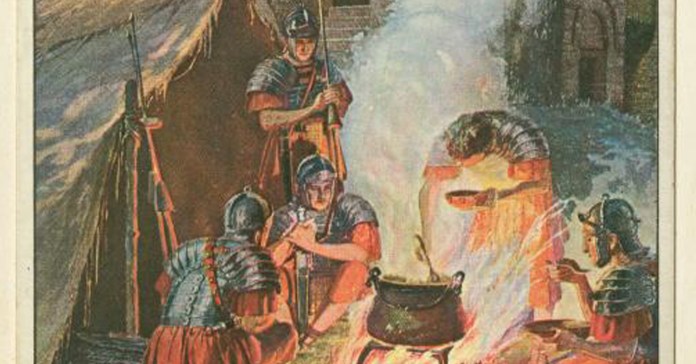
Around the 1st or early 2nd century in the Roman Empire, a man named Metilius Crispus and his traveling companions mysterious disappeared without a trace. Crispus was journeying to take up a military command in the Roman army when the mysterious event took place. The man’s disappearance was recorded by his close friend, Pliny the Younger (c. 61/62-113), a wealthy lawyer, bureaucrat and statesman, who was known to invest in the careers of up-and-coming individuals in the Roman Empire. In fact, Pliny had loaned Metilius Crispus a great deal of money before his disappearance, which gave Pliny all the more reason to be concerned for his friend’s wellbeing and whereabouts. Pliny the Younger, a prolific letter-writer, wrote about this topic of what “befell my fellow-townsman Metilius Crispus” in a letter sent to a colleague named Baebius Hispanus; he wrote: “I had obtained his promotion to the rank of centurion and had given him 40,000 sesterces for his outfit and equipment when he set out, but I never had a letter from him afterwards, nor any news of his death. Whether he was killed by his slaves or along with them, no one knows: at any rate, neither Crispus nor any of them were seen again…” (Pliny the Younger, Letters, 6.25). As he explained in his letter, Pliny, after handing over money to Crispus and watching him depart for the military, never heard from, or of, the man ever again. Pliny never discovered the truth of what happened, be it murder or some less nefarious ending, such as the man simply running away with the wealth. For his part, Pliny the Younger suspected the worst, believing the likeliest story was that Metilius Crispus possibly had been killed on the road. Whatever the case, Pliny the Younger, despite his close connections to Rome’s emperor and other government officials, never was able to locate Crispus or his traveling companions, regardless of if they were living or dead. They had vanished without a trace.

Written by C. Keith Hansley

Picture Attribution: (Illustration labeled Encamped Roman soldiers, by Carl Nebel (c. 1805-1855), [Public Domain] via Creative Commons and the NYPL Collections).


Sources:

  • The Letters of Pliny the Younger, translated by Betty Radice. New York: Penguin Classics, 1963, 1969.

Two Young Men Confessing To Alexander The Great Their Conspiracy Against Him, By Nicolai Abildgaard (c. 1743 – 1809)

This painting, by the Danish artist Nicolai Abildgaard (c. 1743 – 1809), depicts a scene of the ancient conqueror, Alexander the Great (r. 336-323 BCE), being told of a conspiracy that threatened his life. Although the artwork’s title does not explicitly specify which plot or conspiracy is being depicted, the most likely assumption is that the painting references a nefarious scheme hatched by the king’s royal pages around 327 BCE. It was a plot mentioned by most of the ancient scholars about Alexander, including Plutarch (c. 50-120), Quintus Curtius Rufus (c. 1st century), and Arrian (c. 90-173+), with the last two sources presenting the fullest accountings of the tale. Arrian’s work has the reputation of being more historically accurate, whereas Curtius Rufus, in his narrative, often sacrificed historical accuracy for vivid descriptions and storytelling. As Nicolai Abildgaard was an artist, he seemed to have understandably been drawn to the account of Curtius Rufus, which provided more imagery and told the story from a more artistic framework.

As the story goes, the conspiracy of the royal pages began after a particular page named Hermolaus was punished by Alexander the Great due to a hunting argument. Hermolaus had run afoul of Alexander by killing a boar that Alexander wanted to hunt alone. Alexander, angry that his own chance to kill the boar was stolen, decided to have Hermolaus flogged or whipped as punishment. Hermolaus was bitter after this beating, so he decided to start a conspiracy to assassinate Alexander the Great. His first recruit to the plot was his close friend and fellow royal page, Sostratus. From there, Hermolaus and Sostratus went on to recruit a number of other disgruntled pages. According to the accounts of Arrian and Curtius Rufus, the new recruits included men named Antipater, Epimenes, Anticles, Philotas, Nicostratus, Asclepiodorus and Elaptonius. Together, these men plotted to wait until a night when enough of the conspirators were on guard duty at Alexander’s tent to slip into their liege’s quarters and attempt to murder him while he slept.

Unfortunately for Hermolaus and his conspirators, their plan discounted one particularly important variable—Alexander’s own free will and his ability to unpredictably amend his schedule. Therefore, in true Alexander fashion, the conspiracy’s timeline was thrown into chaos when the king allegedly partied all night with loyal companions on the very evening that the conspirators had deemed to be the best night for an assassination attempt. On this, Arrian stated, “It so happened that on the night in question Alexander sat up drinking until dawn” (Arrian, Anabasis of Alexander, 4.14). With the changing of the guard and the break of day, the assassination attempt was thwarted.

Even though Alexander survived the night, the conspirators could always plot to strike again. Yet, time was a double-edged sword. While the next assassination attempt was planned, the individual members of the plot also now had time to reevaluate their commitment to the mission. In the end, one of the conspirators succumbed to his guilty conscience and decided to tell friends and family about the mess he had put himself in. This repentant conspirator was Epimenes. According to Arrian’s account, he first told his friend, Charicles, and then Epimenes’ brother, Eurylochus, was informed. Curtius Rufus’s account, contrastingly, claimed that Epimenes went straight to his brother, Eurylochus, with the confession. Arrian’s account read as follows, “Charicles told Epimenes’ brother, Eurylochus, who went to Alexander’s tent and passed everything on…Alexander ordered the arrest of all the boys whose names were given by Eurylochus. Questioned under torture, they admitted their guilt…” (Arrian, Anabasis of Alexander, 4.14). Curtius Rufus told much the same story, albeit with more creative license for imagery and storytelling technique. He wrote:

“[Epimenes] revealed what was afoot to his brother Eurylochus…so Eurylochus immediately seized his brother and came with him into the royal quarters. He alerted the bodyguards and declared that the information he brought related to the king’s security…They opened the door, took in a lamp and woke Alexander, who now lay in a deep drunken sleep. Gradually coming to his senses, he asked what news they brought…Epimenes then gave a detailed and systematic account, including the names of the conspirators” (Quintus Curtius Rufus, History of Alexander, 8.6.20-24).

It is this second account that Nicolai Abildgaard seems to re-create in his painting. The artwork likely shows Eurylochus dragging in his brother, Epimenes, to the bedside of Alexander the Great to confess about the conspiracy. According to Curtius Rufus’ account, Eurylochus’ actions ended up saving Epimenes’ life. The other conspirators, however, were all reportedly tortured and executed.

Written by C. Keith Hansley

Sources:

  • The Campaigns of Alexander by Arrian, translated by Aubrey de Sélincourt. New York: Penguin Classics, 1971.
  • The History of Alexander by Curtius Rufus, translated by John Yardley. New York: Penguin Classics, 1984, 2001, 2004.
  • https://open.smk.dk/en/artwork/image/KMS3863

Jean-Jacques Rousseau

Jean-Jacques Rousseau (c. 1712-1778)

“You require nothing more to be made perfectly happy than to know how to be satisfied with being so.”

  • From the Dedication to the Republic of Geneva in On the Origin of Inequality by Jean-Jacques Rousseau (c. 1712-1778). The quoted edition was translated and published by the Great Books Foundation (Chicago, Illinois, 1949).

The Myth Of Athena’s Owl, Nyctimene

Much is known about the ancient goddess, Athena (associated with the Roman Minerva), including her origin story—in which she strangely burst forth from the head of the leading god, Zeus—and the mysterious beginnings of her powerful defensive aegis, which was crafted from the remains of the titan, Pallas. Her divine jurisdiction over wisdom, art and war was defined by many ancient authors, as were the stories of her many interactions with legendary heroes such as Perseus, Heracles and Odysseus. It is also well known that birds, especially owls, had a sacred connection to Athena. Yet, few ancient authors took the time to write about whatever myths explained the backstory of Athena’s linkage to the owl. One rare writer who tried to fill the void was the Roman poet, Ovid (c. 43 BCE-17 CE), who labeled Athena’s owl with a name and wrote down a brief backstory for the sacred bird.

As the story goes, Athena’s owl was originally a woman named Nyctimene (or Nyktimene), who lived as a princess on the island of Lesbos. Although being a princess of an ancient Greek island kingdom sounds pleasant, Nyctimene’s otherwise ideal life took the path shared by most women featured in ancient Greek mythology—she was abused by a man. In Nyctimene’s case, she was horribly raped by her own father, causing the poor girl to flee into the wilderness to escape her abuser and to avoid the unwanted gaze of judgmental eyes. Athena took pity on Nyctimene, turning her into an owl and keeping her as a companion. Ovid curiously told this tale from the perspective of a jealous crow that was bitter about being, as it self-professed in the text, “stripped of my place as Minerva’s protector and ranked underneath the owl!” (Ovid, Metamorphoses, book 2, lines 563-564). Ovid wittily had the rude crow slanderously try to frame Nyctimene as the instigator of her abuse. Speaking as the crow, Ovid wrote:

“…I’m forced to surrender my place
to the owl, who became a bird by committing a dreadful crime?
That owl was once Nyctímene. Haven’t you heard the story,
known through the whole of Lesbos, of how she corrupted her father
by incest with him? For sure, she’s a bird; but her guilty conscience
drives her to shun the eyes of men and the glare of the daylight.
She hides her shame in the dark, excluded by all from the clear sky.”
(Metamorphoses, book 2, lines 589-595)

This, then, is one possible origin story for Athena’s owl. According to Ovid’s account, the owl was an abused princess who ran away from home, and after being benevolently transformed into a bird, she chose to stay as a companion and guardian of the protective celibate goddess, Athena. Anyway, if Ovid’s tale of Nyctimene is too unpleasant or not convincing, one can always fall back on the commonplace suggestion that owls were associated with Athena because owls, like the goddess, were symbolic of wisdom.

Written by C. Keith Hansley

Picture Attribution: (Tetradrachm, Head of Athena (obverse); Owl (reverse), dated 449–440 BCE, [Public Domain] via Creative Commons and the Cleveland Museum of Art).

Sources:

Hector’s Farewell To Andromache, Attributed To Anton Kern (c. 1710-1747)

This painting, attributed to the German artist Anton Kern (c. 1710-1747), was inspired by the family life of the legendary hero, Hector. Although he was best known as the champion of Troy and the mightiest warrior in the Trojan army, Hector was also a loving husband and a doting father. The painting featured above, rather than focusing on Hector’s role in the Trojan War, chose instead to showcase the tragic scene of Hector bidding farewell to his family before marching off to face the Greek coalition that was invading Troy under the leadership of formidable officers like the legendary Achilles and Odysseus.  As the Trojan War was said to have been a decade-long affair, there would have been many farewells between Hector and his family as the hero went off to command the defenses of Troy. Yet, the painting likely draws most of its inspiration from a specific farewell scene featured in book 6 of Homer’s Iliad. As the story goes, that particular encounter began with both Hector and his wife, Andromache, frantically wandering their city, looking for each other. Andromache, tailed by her young son being held by a nurse, finally found Hector by the city gates. On their meeting, Homer wrote, “Hector raced out of the house and retraced his steps down the well-built streets. He had crossed the great town and reached the Scaean gate—his route out on to the plain—when Andromache herself, who married him with a rich dowery, came running up to meet him…and her waiting-woman carried the little boy in her arms, their baby son and Hector’s darling, lovely as a star…” (Homer, The Iliad, book 6, approximately lines 390-400).

It was an encounter with a wide array of emotions, with the family sometimes sharing in laughter and other times wetting their eyes with tears. Homer, especially while describing the interactions of the parents with their son, brought to life with his words the mixture of nervous laughter and foreboding sadness that the family was experiencing. Homer wrote:

“Hector reached out for his boy. But the child shrank back with a cry to the bosom of his girdled nurse, alarmed by his father’s appearance, terrified by his bronze helmet with its horsehair plume that he saw nodding frighteningly from the top. His father and lady mother burst out laughing. Glorious Hector quickly took his helmet off and put it, all shining on the ground. Then he kissed his dear son, dandled him in his arms and prayed to Zeus…With these words Hector handed the boy into the arms of his wife, who took him to her fragrant bosom, laughing through her tears” (Homer, The Iliad, book 6, approximately lines 465-485).

Such is the literary inspiration for the painting featured above. Just as was described in Homer’s poetry, the artwork shows tearful Andromache intercepting Hector in the city streets. Their young son can be seen in the background, being held up by a nurse. The scene seems to show the moments just before or after Hector said farewell to his son, who recoiled from the helmet’s plume. With the goodbyes said and the helmet placed back on his head, Hector prepared to depart for war. After some final words about how no one can escape death, followed by a statement that he would rather die a hero than survive as a coward, Hector finally pulled himself away from his family and marched off to continue his doomed struggle against Achilles and the Greeks.

Written by C. Keith Hansley

Sources:

William Shakespeare

William Shakespeare (c. 1564 [?] – 1616)

“It is not enough to speak, but to speak true.”

  • From William Shakespeare’s A Midsummer Night’s Dream (Act V, scene 1, approximately line 120). The edition used here is the Wolfgang Clemen and Sylvan Barnet version (Signet Classic/New American Library, 1963, 1964).

The Tense And Mobilizing Elections Of 329 BCE In Rome

Hitting the ground running is a saying that is extremely applicable for the leaders of ancient Rome who took office after the elections of 329 BCE. Lucius Aemilius Mamercinus and Gaius Plautius were the winners of the vote, and they had a lot on their plate when they took office. First and foremost, they inherited an ongoing war against a Privernum-Fundi alliance that had been raging since 330 BCE. By the time Mamercinus and Plautius took office, Fundi had already surrendered and Privernum was still under siege. Yet, in addition to the war, new scary rumors gripped Rome around the time of the elections. It was the Roman people’s worst nightmare—a Gallic army was said to have been possibly marching toward Rome. As Rome had been sacked by a Gallic force between 390-386 BCE, and had subsequently faced further sporadic waves of less successful marauding Gallic armies in the following decades, the report of a new potential Gallic invasion was a threat that the Roman population took seriously. Responding to this news, Mamercinus and Plautius, on their first day in office, were said to have hastily mobilized a new army to defend against the potential Gallic invaders. On these events, the Roman historian, Livy (c. 59 BCE-17 CE), wrote, “The war with Privernum was not yet finally settled when a gloomy report reached Rome of a Gallic rising, news which the Senate scarcely ever ignored. Without delay the new consuls, Lucius Aemilius Mamercinus and Gaius Plautius, were accordingly ordered, on the very day (the first of July) they entered office, to divide the commands between them. Mamercinus, who had been allotted the Gallic war, was told to enlist an army without allowing any exemptions” (Livy, History of Rome, 8.20). As the Roman military was already mustered and in action for the siege of Privernum, the new drive for mobilization was reportedly scraping the bottom of the proverbial barrel that was Rome’s manpower. Nevertheless, the new army was indeed raised and temporarily was camped in the region of Veii.

Intriguingly, Mamercinus’ army soon found out that the news about an incoming threat from Gaul was unfounded. As told by Livy, “it was quite clear that all was quiet amongst the Gauls at that time, and the whole army was diverted to Privernum” (Livy, History of Rome, 8.20). On whether or not the news about the possible Gallic threat was a real misunderstanding or simply a quick and easy ploy by the Roman leadership to assemble another army to reinforce the siege of Privernum, Livy, unfortunately, did not give his opinion on the matter. Whatever the case, the additional army seemed to be just what the siege of Privernum needed, and the city fell to the Romans before the end of the year.

Written by C. Keith Hansley

Picture Attribution: (Cropped Illustration titled Humiliation of captive enemies by the yoke, from the Munchener Bilderbogen series (Braun und Schneider, 1852-1898), [Public Domain/No Rights statement] via Creative Commons and the NYPL Collections).


Sources:

  • The History of Rome (Rome and Italy) by Livy, translated by Betty Radice. New York: Penguin Classics, 1982.

17th-Century Tapestry Depicting Charles Le Brun’s Painting Of Alexander Entering Babylon

This 17th-century tapestry, woven by an unknown artist, re-creates a painting produced by the workshop of Charles Le Brun (c. 1619-1690) that depicted Alexander the Great entering the city of Babylon. The Macedonian conqueror visited the famous city twice. The first occasion was in 331 BCE, while Alexander was campaigning against Darius III of Persia (who would be murdered by his own followers the next year). Alexander the Great and his warriors were warmly welcomed into the city of Babylon, as the Babylonians disliked Persian rule and were happy to have Alexander overthrow the Achaemenid Empire to which Darius III belonged. Ancient biographers of Alexander, such as Diodorus Siculus (1st century BCE) and Arrian (c. 90-173 CE), recorded similar stories about Alexander’s entrance into Babylon—that Alexander’s army was met with cheers, celebration, and general wining and dining with the best food and drink that the city had to offer. Diodorus Siculus described the scene, writing that Alexander “arrived with his whole army at Babylon. Here the people received him gladly, and furnishing them billets feasted the Macedonians lavishly. Alexander refreshed his army from its previous labours and remained more than thirty days in the city because food was plentiful and the population friendly” (Library of History, 17.64). Years later, Alexander the Great would come back to Babylon during his return trip from campaigning in the borderlands of India. It was during this second visit to Babylon, in 323 BCE, that Alexander the Great mysteriously became ill and died.

Written by C. Keith Hansley


Sources:

Lucan

Lucan (c. 39-65)

“The gods don’t care, they’d never stoop so low,
the Fates don’t give a damn about your life or death.
Everything follows the whims of men of action.”

  • From a speech attributed to Julius Caesar in Lucan’s Civil War (Book 5, approximately between lines 322-356), translated by Matthew Fox (Penguin Classics, 2012).

The Rebellion Of Pasagnathes Of Armenia

A man named Pasagnathes commanded troops and land in Armenia around the year 650 at the behest of the emperors of Constantinople. It was a bittersweet job for Pasagnathes. Although holding a post as governor of an imperial province was prestigious and powerful, it was also a tumultuous and dangerous occupation, especially in the chaotic and war-torn 7th century that Constantinople was experiencing. In Pasagnathes’ century, the Lombards were chipping away at Constantinople’s control in Italy, and this Italian conflict predated and overlapped with the much greater war that erupted between Constantinople and Persia in 602. Formidable Emperor Heraclius (r. 610-641) inherited the war with Persia and succeeded in finally winning the conflict in 628. Nevertheless, although the war with Persia was over, another great war was just beginning. While the age-old rival Romans and Persians had been squandering each other’s resources and manpower between 602 and 628, Islam had come into being in Arabia and aggressive Arab armies left their peninsula to wreak havoc on the exhausted realms of Constantinople and Persia. During the reign of the first caliph, Abū Bakr (r. 632-634), Arab armies began expanding into the regions of Jordan, Palestine, Syria and Iraq, and these expansionist wars increased dramatically during the reigns of Umar I (r. 634-644) and Uthman (r. 644-656). Emperor Heraclius was operating defensively by this point, trying to mitigate the damage of invasion, while also striving to fortify and garrison Anatolia. Under his leadership, Constantinople’s hopes and morale were still relatively high, but the able emperor sickened and died in 641, throwing Pasagnathes and other regional leadership figures into a new round of panicked turmoil.

Emperor Heraclius’ immediate successors proved to be a destabilizing and ineffective bunch. Heraclius was succeeded by his sons, Constantine III and Heraclonas, but Constantine quickly died (likely of tuberculosis) before the year 641 was over, leaving his brother as the sole ruler. Succession drama did not end there, however, for Emperor Heraclonas and his mother, Empress Martina, were soon accused (most likely wrongfully) of poisoning the late Emperor Constantine III, and these rumors caused Emperor Heraclonas to be ejected from power by his political rivals and enemies. This, too, occurred in that busy year of 641. Following the arrest, mutilation, and imprisonment of Heraclonas, the ousted emperor’s nephew, Constans (son of Constantine III), took power in Constantinople as Emperor Constans II (r. 641-668). With such a peculiar rise to power, in addition to the ongoing threat and reality of invasions at that time, it is no surprise that Constans II’s reign became plagued by many mutinies, revolts and rebellions.

Pasagnathes, from his post in Armenia, watched from the sidelines as at least two rebellions erupted in the first years of Emperor Constans II’s reign. Around 644, a patrician official named Valentinian rebelled against the emperor, but the rebellion was dispersed by loyalist forces. Contrastingly, a different patrician named Gregory led a rebellion in North Africa around 646 or 647, and he had more success remaining independent from the emperor. Nevertheless, Gregory’s brief period of rule in Africa was crushed by Arab invaders, who defeated Gregory’s forces around 647 or 648. Pasagnathes studied these two rebels and learned from their mistakes when he, too, eventually decided to break away from Emperor Constans II. Instead of letting himself be crushed by Emperor Constans’ forces or by opportunistic Arab armies, Pasagnathes decided to have a plan in place before he made his moves, a plan that could give him some safety against both sides. In the end, instead of simply rebelling, Pasagnathes decided to make strong alliances with Constans’ enemies. Pasagnathes’ rebellion, dated to 651 or 652, was recorded by a chronicler named Theophanes (c. 750s-818), who wrote, “In this year Pasagnathes the patrician of the Armenians rebelled against the Emperor. He made agreements with Muawiyah and even gave him his own son. When the Emperor heard this he advanced as far as Kappadokian Cesarea but, losing hope for Armenia, returned” (Theophanes, Chronographia, entry for Annus Mundi 6142). Pasagnathes, therefore, made an alliance with the Arabs, particularly the leading general, Muawiyah (also known as Mu’awiya), who would later become the first Umayyad ruler. As the quote hinted, Pasagnathes’ alliance with the Arabs was too much for Emperor Cosntans II to overcome. Curiously, however, Pasagnathes’ rebellion in Armenia was not a complete success. Portions of the region remained hostile to the encroaching Arab forces, and Armenia continued to host skirmishes and battles between the armies of Constantinople and the Arabs. As for Pasagnathes, after his rebellion or defection, he evidently did not play a conspicuous role in the conflict between Constantinople and the Arabs, for chroniclers such as Theophanes did not mention him again in the history of the region.

Written by C. Keith Hansley

Picture Attribution: (Scene of The Crucifixion by Andreas Pavias (c. 15th century), [Public Domain] via Europeana and the National Gallery (Alexandros Soutsos Museum)).


Sources:

  • Theophanes, The Chronicle of Theophanes, translated by Harry Turtledove. Philadelphia: University of Pennsylvania Press, 1982.