Home Blog Page 274

Thucydides


Thucydides (Athenian general and historian, c. 460-400 BCE)

“Haste and anger are, to my mind, the two greatest obstacles to wise counsel – haste, that usually goes with folly, anger, that is the mark of primitive and narrow minds.”

  • History of the Peloponnesian War (Book III, 42) by Thucydides, translated by Rex Warner (Penguin Classics, 1972). The quote comes from a speech that Thucydides wrote while in the character of Diodotus.

The Medieval Tale About The Devil Impersonating A Priest And Giving A Perfect Sermon


The Malleus Maleficarum, published by Heinrich Kramer and James Sprenger in 1487, was one of the most popular texts on witchcraft and demonic forces during the age of the witch craze. Between sections describing monsters, spells and demonic abilities, the authors of The Malleus Maleficarum included tales of witchcraft that they heard from other inquisitors, or allegedly experienced themselves during their time as active witch-hunters. While most of the stories they recorded focused on the dastardly deeds of witches, some of the tales also contained subtle jabs at the 15th-century religious community.

One humorous criticism of the Christian community was quietly placed into the end of Part II, Question 1, Chapter IX of The Malleus Maleficarum. It comes in the form of a short tale, which took up the space of only one paragraph.

According to the story, an anonymous clergyman went to hear a sermon delivered by an anonymous priest of an anonymous church in an anonymous town. As you can see, names, dates and locations are often lacking in the tales found within The Malleus Maleficarum. Nevertheless, the unnamed clergyman entered the church and took his seat to hear the sermon. As he watched the priest speak, something about preacher’s demeanor made the clergyman in the audience suspect that all was not as it seemed. Somehow, instinct told the attendee that the priest was not a man of God at all, but rather the Devil.

Convinced that Satan was preaching to the congregation, the clergyman listened carefully to every word that the Devil spoke. When the Devil inevitably spoke some blasphemy or heresy, the clergyman planned on denouncing the demonic priest to the congregation, revealing him as Satan. Yet, as the clergyman listened to the sermon, he could find nothing wrong with what the Devil was saying. The theology was correct. The interpretation of scripture was sound. The prescribed advise and religious counsel was pure. Satan channeled his angelic past to deliver the ultimate sermon. To the clergyman’s chagrin, he could not find a single criticism of the Devil’s speech and allowed the sermon to be concluded without interruption.

When the sermon was over and the congregation had funneled out of the church, all that remained in the sanctuary was the priest and the man who had seen the demon within. When confronted, the demonic priest, indeed, confessed that he was Satan. The clergyman conceded that the sermon was perfect, and only asked for an explanation from the Devil as to why he did not deceive the congregation. In response, Satan joked that although he had taught the congregation the way of supreme holiness, none of them would implement his teachings into their lives, making the scheme all the more diabolical.

Written by C. Keith Hansley.

Picture Attribution: (Saint and the devil, by Michael Pacher (1435–1498), [Public Domain] via Creative Commons).

Sources:

  • From The Malleus Maleficarum by Heinrich Kramer and James Sprenger, translated by Montague Summers (Dover Publications, 1971).

Aristotle


Aristotle (c. 384-322 BCE)

“In every situation one must guard especially against pleasure and pleasant things, because we are not impartial judges of pleasure.”

  • From The Nicomachean Ethics (Bekker page 1109b) by Aristotle, translated by J. A. K. Thomson (Penguin Classics, 2004).

How An Old Man Allegedly Helped Create The Han Dynasty By Dropping A Shoe


Zhang Liang was from a prominent family that served one of the feudal kingdoms that was eventually toppled by the Qin Dynasty (c. 221-206 BCE). Even after the Zhang family found itself under Qin rule, they still had wealth—Zhang Liang reportedly had the means to fund a staff of 300 servants. Yet, Zhang Liang was too patriotic to appreciate being able to keep his wealth under the new regime. Instead, he decided to spend his remaining family fortune on bankrolling a band of rebels to resist the Qin rulers.

According to the ancient historian, Sima Qian (c. 145-90 BCE), Zhang Liang and his band of dissidents tried to assassinate the First Emperor of Qin, Shihuangdi, in 218 BCE. They hunted down the emperor’s carriage train while he was touring the east. The rebels set up an ambush and Zhang Liang gave his strongest recruit an enormous iron bludgeon with which to lead the attack. As the rebels had planned, the emperor’s entourage rolled into the trap. When the time was right, the assassins charged toward the wagons and successfully smashed their way into one of the regal carriages. Luck, however, was not on the side of the rebels that day. They made the unsalvageable mistake of attacking the wrong carriage. Instead of discovering the vulnerable emperor inside, the rebels found only startled attendants. The mistake gave the guards enough time to rally to the defense of their emperor. With their plan foiled, the rebels scattered and went into hiding. Zhang Liang assumed an alias and settled down in Xiapei. While there, he spent much of his time pacing around the local embankments.

According to Sima Qian, Zhang Liang was strolling along one of these embankments when he spotted a quirky old man in crude clothing walking toward him. As the two came into speaking distance, Zhang Liang watched in amazement as the elder took off his shoe and deliberately sent it tumbling down the embankment, where it came to a rest beside the water’s edge. Once the shoe came to a halt, the old man asked the baffled Zhang Liang to fetch the shoe. For a moment, the rebel did not know if he wanted to help the man or punch him. After a moment of deliberation, Zhang Liang climbed down the embankment and retrieved the shoe. When Zhang Liang climbed back up with the footgear, the old man then asked the rebel for a further favor—he wanted help putting the shoe back on his foot. After Zhang Liang helped with the shoe, the old man only laughed and walked off without a word.

The befuddled Zhang Liang watched as the chuckling elder continued on his walk. Yet, eventually the old man began shuffling his way back to the slack-jawed rebel. When he had returned, the old man approvingly said that Zhang Liang had potential and asked for the rebel to meet him at that spot on the embankment at dawn in five days time.

Zhang Liang counted off the days and when the fifth had come, he woke up at dawn and set off for the embankment. When he arrived, he found that the old man was already present and visibly angry. The elder chided his student for being late and told him to come again in five days.

On the appointed day, Zhang Liang woke with the birds and arrived at the embankment just before dawn. Again, the old man was already there and, again, the elder was angry. Disappointed, the old man dismissed Zhang Liang and told him to arrive on time in five days.

When the scheduled meeting was near, Zhang Liang decided that he would take no chances. Therefore, the rebel took only a brief nap for his rest and traveled out to the embankment in the middle of the night. To Zhang Liang’s satisfaction, the old man was nowhere to be seen. Nevertheless, the rebel did not have to wait long before he could make out the old man approaching in the darkness. When the two met, the elder mused out loud that this was indeed the Way. After announcing his approval, the old man held out a book to Zhang Liang and prophesied that with its written wisdom, the rebel would become a successful teacher of kings. After that, the old man wandered off into the darkness and Zhang Liang never saw him again.

Sima Qian wrote that the book given to Zhang Liang was called The Grand Duke’s Art of War. As for the old man, Sima Qian did not presume to know the identity of the sage, but he did not rule out the possibility of a supernatural being. Other commentators on the story linked the old man to the semi-mythical Daoist figure, Huang Shigong.

According to Sima Qian, The Grand Duke’s Art of War was priceless for Zhang Liang during the civil wars that brought about the fall of the Qin Dynasty and the rise of the Han Dynasty. When widespread rebellions sprung up against the Qin Dynastic rule in 209 BCE, Zhang Liang joined the rebels and aligned himself with Liu Bang, the king of Han, and King Cheng, who ruled Zhang Liang’s ancestral homeland. When a rival warlord murdered King Cheng, Zhang Liang put his full support behind Liu Bang, who would found the Han Dynasty of China and bring the fractured Chinese kingdoms under his control by 202 BCE.

Zhang Liang was said to have instructed Liu Bang in the wisdom of The Grand Duke’s Art of War and also tutored Liu Bang’s successor, Emperor Hui. Although Zhang Liang became too sick to fight during Liu Bang’s rise to power, he played a vital role in the background as a master strategist for the Han forces. For his contributions, Zhang Liang was given the title of marquis.

Written by C. Keith Hansley.

Picture Attribution: (Painting of Zhang Liang and Huang Shigong, [Public Domain] via Creative Commons).

Sources:

The Malleus Maleficarum


Heinrich Kramer and James Sprenger (published 1487)

“It is to be said that the soul is thought to reside in the centre of the heart, in which it communicates with all the members by an outpouring of life.”

  • From The Malleus Maleficarum (Part II, Question I, Chapter IX) by Heinrich Kramer and James Sprenger, translated by Montague Summers (Dover Publications, 1971).

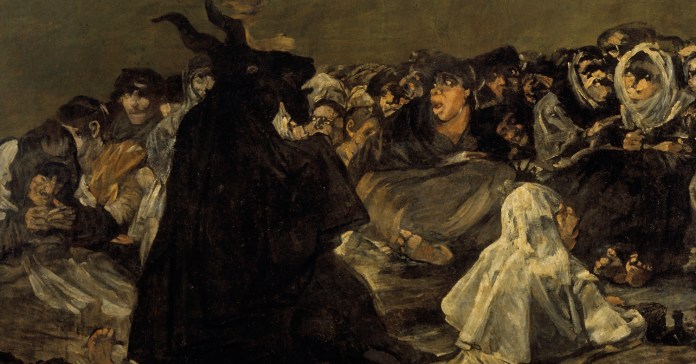
Medieval Inquisitors Believed That Witches Allegedly Collected Living Severed “Members”


The European and colonial witch hunters believed many bizarre ideas about witches, but some theories were more baffling than others. The Malleus Maleficarum, published by the inquisitors Heinrich Kramer and James Sprenger around 1487, served as the go-to guide for those who wanted to root out witchcraft for most of the witch-hunting era. In it, the inquisitors wrote about witches, demons, monsters, spells and other miscellaneous dark content. One of the more peculiar spells that witches were able to cast could allegedly make men believe that their manhood was missing. Supposedly, the spell was an illusion that left only smooth skin visible to the victim’s eye. We have already published a small article on that strange magic, HERE. Yet, there was an additional quirk to the spell. The witches, according to the inquisitors, liked to hoard the illusory severed members in hidden locations.

The wording used by Heinrich Kramer and James Sprenger to describe this bizarre theory in The Malleus Maleficarum is too entertaining to be paraphrased, so it will be quoted here. Witches that used the dismembering spell “sometimes collect male organs in great number, as many as twenty or thirty members together, and put them in a bird’s nest, or shut them up in a box, where they move themselves like living members, and eat oats and corn, as has been seen by many and is a matter of common report” (Part II, Qn 1, ch 7).

In some of the odd tales, the witches who allegedly used spells to make men think that their members were gone would eventually direct the emasculated victims to one of these wriggling hoards. The Malleus Maleficarum reported one account where a witch supposedly instructed one of these memberless men to climb a tree and pick out his lost limb from a crowded nest that was filled with wiggling manhoods. When the unnamed victim chose the largest one in the nest, the witch chastised the man and made him pick again, saying that the one he was holding belonged to a parish priest.

As was stated earlier, the dismembering and the hidden hoards were all allegedly an elaborate illusion. But beware, The Malleus Maleficarum later stated that the Devil was also known to take genitals if the good angels allowed, and when Satan gathered manhood, it was apparently no illusion.

Written by C. Keith Hansley.

Picture Attribution: (Witches’ Sabbath, by Francisco Goya (1746–1828), [Public Domain] via Creative Commons).

Sources:

From The Malleus Maleficarum by Heinrich Kramer and James Sprenger, translated by Montague Summers (Dover Publications, 1971).

Egil Skallagrimsson


Egil Skallagrimsson (semi-legendary Viking poet, c. 10th century)

“Drink every toast down,
though the rider of the waves
brings brimful horns often
to the shaper of verse.
I will leave no drop
of malt-sea, even if the maker
of sword-play brings me
horn until morning.”

  • A poem attributed to Egil Skallagrimsson in Egil’s Saga (chapter 72), recorded c. 13th century possibly by Snorri Sturluson, translated by Bernard Scudder. New York: Penguin Classics, 2004 edition.

Infant Wine Baths In Ancient Sparta


The great scholar, Plutarch (c. 50-120), was a polymath born in Roman-controlled Greece. Though he wrote prolifically on theology, philosophy and other topics, he is best known for his series of biographies on important figures from ancient Greece and Rome, known together as the Parallel Lives. Interestingly, Plutarch’s biographies on the people who shaped the city of Sparta provide much of what we know about daily life in ancient Sparta.

According to Plutarch, a mysterious man named Lycurgus brought about the famous ascetic militancy that came to define ancient Sparta. Plutarch freely admitted that the accounts about Lycurgus presented more of a myth than man, and that accurately dating Lycurgus’ life was nearly impossible. At best, Lycurgus could be said to have lived as far back as the 9th century BCE, in the time of Homer, or as late as the 6th century BCE, when Sparta started to become noticeably more militant and luxury-opposed than their neighbors. No matter the date of Lycurgus’ life, the Spartans attributed their new lifestyle to his teachings.

One of the more notorious elements of the ancient Spartan way of life was how the elders would reportedly decide which newborns lived or died. Plutarch wrote that Lycurgus imposed a system of state-sponsored eugenics, where procreation was encouraged among pairs who would bring about strong children—even if extramarital affairs were required to do so. In this societal model, children were not raised for the sake of a family, but rather for the protection and longevity of Sparta. As such, Plutarch reported that Spartan parents did not have the right to decide if their children were worthy of joining the community. Instead the newborns were brought to a meeting called a lesche, where the elders would determine the fate of the child. Plutarch wrote that, if healthy, the child was guaranteed a portion of land and was approved for upbringing. If the elders disliked what they saw, the newborn was condemned to abandonment at Apothetae, “the place of rejection,” located near Mount Taygetus.

Even though the fate of their child was out of their hands, Plutarch wrote that some Spartan mothers were impatient, or perhaps anxious, about the lesche and therefore devised their own tests to evaluate the vigor of their infants. In one such test, the baby was bathed not in water, but in undiluted wine. According to Plutarch, the mothers could get a sense of their child’s fate based on the baby’s reaction to the potent alcohol. Lycurgus’ ideal baby supposedly would endure the stinging, staining and powerful fumes, while the weak would allegedly lose control of their senses or stiffen in discomfort.

Despite the obvious ethical issues with the extreme Spartan attitude toward children, Plutarch wrote that nurses from the Spartan culture were coveted in other regions of Greece. The Spartan nursemaids had talents that any parent would dream about—Plutarch listed that they were skilled at teaching children not to be fussy about their food, could root out childhood fears of the dark and even specialized in stopping temper tantrums and fits of crying. Nevertheless, these enviable abilities by far did not make up for the horrid system of Spartan child culling.

Written by C. Keith Hansley.

Picture Attribution: (Wine selling advertisement and prices, “Ad Cucumas” shop, ancient roman painting in Herculaneum, Italy. [Public Domain] via Creative Commons).

Sources:

Anna Komnene


Anna Komnene (c. 1083-1153)

“And this, I fancy, is the true definition of propriety: the due proportion of warm humanity and strict moral principle.”

  • From The Alexiad (Book III, section 8) by Anna Komnene, translated by E.R.A. Sewter, (Penguin Classics, 2009).

In One Odd Tale, King Pippin III Of The Franks Fought A Demon While He Was In A Bath


In the mid 880s, a monk of St. Gall known as Notker the Stammerer wrote an unfinished text called The Deeds of Charlemagne. Most of the first book of the text consisted of an odd collection of tales concerning Charlemagne and the bishops in his lands. The second book of the text transitioned more into Charlemagne’s foreign policy and often digressed into other stories about the great king’s predecessors and successors. Although Notker the Stammerer was writing a biography, his writing style can be frustrating to people seeking historical information on the life of Charlemagne. Notker often neglected to mention names, locations and dates, making many of the tales collected in his text virtually impossibly to validate. In addition to this, many of Notker’s stories were fantastical in nature, featuring monsters, demons and overt, flashy divine interventions, making them unpalatable to most modern historical narratives. Nevertheless, the odd tales of Notker the Stammerer can give a glimpse into the mind of a 9th-century monk and have value, even if only for the sake of entertainment.

In one of the digressions away from the main subject of his text, Notker the Stammerer began commenting on Pippin III (r. 751-768), the first Carolingian king of the Franks and the father of Charlemagne. After briefly recounting how Pippin attacked the Lombards on the behest of the Pope, Notker transitioned into telling a few select stories about the king.

One of the tales was about a supernatural battle between Pippin and a demonic creature. The alleged event took place at an unknown date when King Pippin was readying himself for a bath in a natural hot spring located in the city of Aachen. The king sent his chamberlain and guards to assure that the water was clean and, when the purity of the water was confirmed, the king had the troops set up a perimeter around the hot spring to keep anyone from disturbing his bath.

Eager to enter the hot waters, Pippin began stripping off layers of clothing. He had taken off everything except a linen gown and slippers when something caught his eye. It was a humanoid shape, a dark mass that resided somewhere between the corporeal and spirit realms.

The demonic creature, or “the old enemy” as Notker called it, suddenly attacked Pippin. Using the sign of the cross, Pippin was said to have been able to stun the demon, buying himself enough time to draw his sword. Pippin then stabbed at the dark entity, driving his sword through the shadowy mass, not stopping until his blade was lodged deep in the ground. The wound seemingly killed or banished the creature, causing it to dissolve into a pool of blood and slime that polluted the hot spring. In an odd end to the tale, Notker the Stammerer wrote that King Pippin III merely waited for the current of the spring to carry away the dark grime and, when the water was once again clean, he nonchalantly took his bath.

Written by C. Keith Hansley.

Picture Attribution: (cropped and modified Pippin III painted by Louis-Félix Amiel (1802–1864), [Public Domain] via Creative Commons).

Source:

  • Two Lives of Charlemagne, by Einhard and Notker the Stammer, translated by David Ganz. New York: Penguin Classics, 2008.